You never know when some little piece of knowledge is going to matter.
That is one of the strange joys of being a New York City tour guide. You spend years walking the same streets, riding the same ferries, studying the same museums, and then one day, out of nowhere, a tiny detail you filed away years ago becomes the thing that makes someone’s entire day.
Recently, I had the pleasure of guiding a group of kind, smart Filipino doctors. As part of the tour, I got them into a quiet private spot on the Statue of Liberty ferry with one of the best angles for photos. A lot of experienced guides who work that circuit know how to do that. We earn our keep.
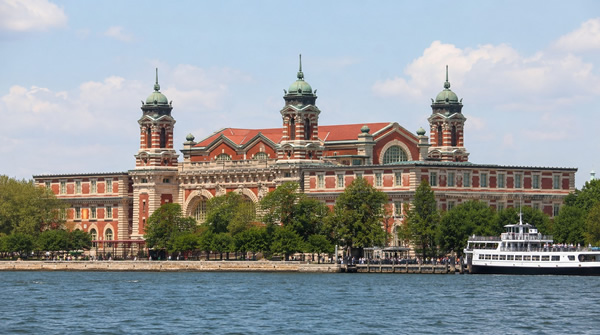
But the moment that really mattered came later, inside Ellis Island.
Most visitors go through the main exhibits, take in the powerful immigration stories, and understandably move on. Ellis Island is emotionally overwhelming in the best way. It is about hope, fear, risk, family, illness, separation, opportunity, and the great gamble of starting over.
But tucked away near the very end of the museum is an exhibit about Filipina nurses at Ellis Island.
Very few people make it that far. Very few tour guides even know it is there.
I knew about it because, years ago, I worked with an elite and very caring girls’ school that hired me, along with fellow guides Megan Tourguide, Matthew Baker, Jonathan Turer, and Anne Desmond, to lead an annual tour of the contemporary immigration exhibit. We did those tours for years, until Ellis Island stopped allowing private indoor tours in 2019.
That exhibit is past most of the museum. The panel about Filipina nurses is at the very end. It is not something you stumble upon unless you know exactly where you are going.
So I brought the doctors there.
Because of the current rules, I could not formally guide them inside. I had to quietly lead them to the spot and let the exhibit speak for itself.
And it did.
We were the only people there.
For this group, it meant something. New York has a remarkable heritage of Filipina nurses, and here was a piece of that story, sitting quietly in a corner of Ellis Island, waiting for the right people to find it.
We also visited two medical exhibits at Ellis Island. Not the abandoned hospital buildings, but museum exhibits about the medical side of immigration. That part of the island’s story is fascinating and often overlooked.
Ellis Island had some of the most advanced medical facilities in the world for its time. The goal was not just to process immigrants quickly. Officials wanted people to be healthy enough to work, healthy enough to enter the country, and not carrying illnesses that could spread through the population. It was medicine, bureaucracy, public health, fear, and hope all rolled into one very New York story.
The doctors were fascinated. They were, to use a technical historical term, jazzed.
And I was glad to be able to share that part of the island with them.
That is the thing about hiring a private tour guide. Yes, it is a luxury. But when it is done well, it is not just someone pointing at buildings and reciting dates. It is experience. It is judgment. It is knowing when to skip the obvious thing and when to lead someone to the quiet corner that suddenly makes the whole day more personal.
Sometimes the best part of a tour is not the famous view, though those certainly help.
Sometimes it is the hidden panel at the end of the museum.
And sometimes, experience counts.